Brought to Japan
What crossed the seaalong with Zen.
Master Ingen and the Ōbaku monks brought more than Zen.Tools of prayer, food, tea, letters: here we visit what lives on in everyday life today.
Prayer
Keeping the sound of prayer in time.
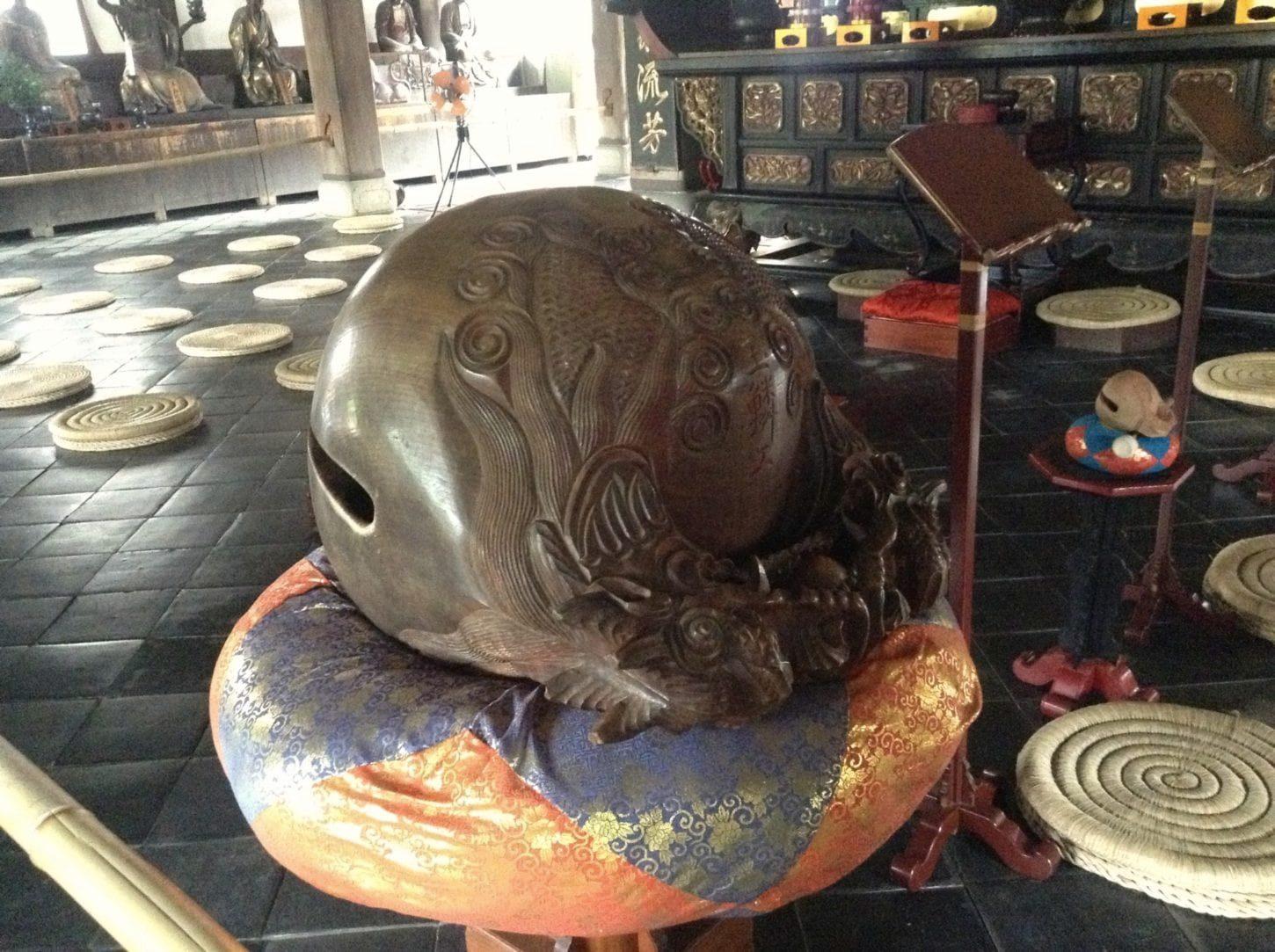
Mokugyo
TraditionToday's round mokugyo is also said to have been brought by Master Ingen.It is a ritual instrument shaped like a fish, used to keep the rhythm when sutras are recited.
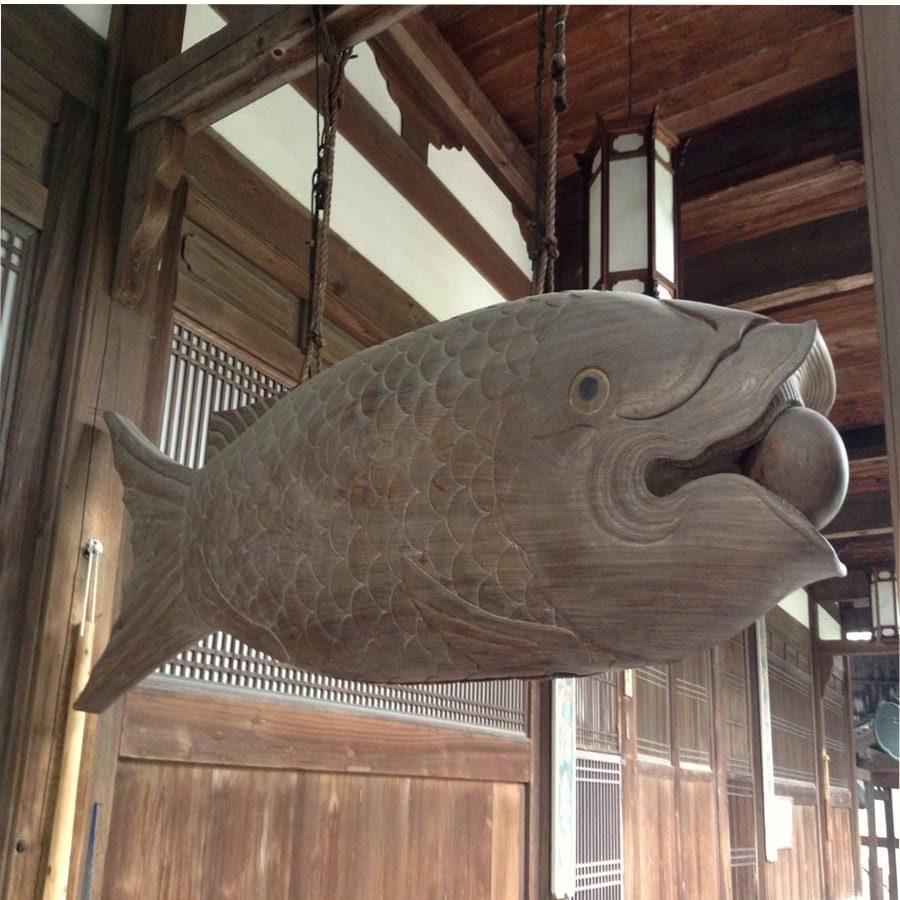
Kaipan
A large, fish-shaped instrument hanging in the corridor of Manpukuji.Held to be the origin of the mokugyo, it is struck to announce the hours of the temple's day.
Food
Flavors of the continent, at the table.
Fucha ryōri
The name means "sharing tea with everyone." Four people sit at one table and serve themselves from large platters.Many dishes are cooked with oil, and there is mafu, said to be the origin of sesame tofu.
Kanten (agar)
TraditionIt came about by chance at an inn in Fushimi, Kyoto,and Master Ingen is said to have named it "kanten."
Ingen beans
TraditionA name after Master Ingen.Some say that what he brought was in fact the hyacinth bean (fujimame).
Tea
Zen in a cup of tea.
Sencha
Ming-style sencha is held to have spread through Master Ingen and the other Ōbaku monks.The Ōbaku monk Gekkai Genshō sold tea in Kyoto as Baisaō, "the old tea seller," and Manpukuji has a Baisadō, a hall for him.
Letters
From the letters of the sutras, a typeface of today.
Minchō type
The Ōbaku edition of the Buddhist canon, by Zen Master Tetsugen, was cut anew from Ming printed books.It is held to be a large-scale example of bringing the letterforms of Minchō type to Japan.
Manpukuji tells that watermelon, lotus root and mōsō bamboo were also brought by the Master.
Tradition Handed down by tradition, with no sure record.