
Manpukuji, the Head Temple
A Ming Zen templestands in Uji.
The head temple of the Ōbaku school, founded by Master Ingen in Uji, Kyoto, in Kanbun 1 (1661).Its halls, in the style of the late Ming in China, have come down to us as they were built.
The halls
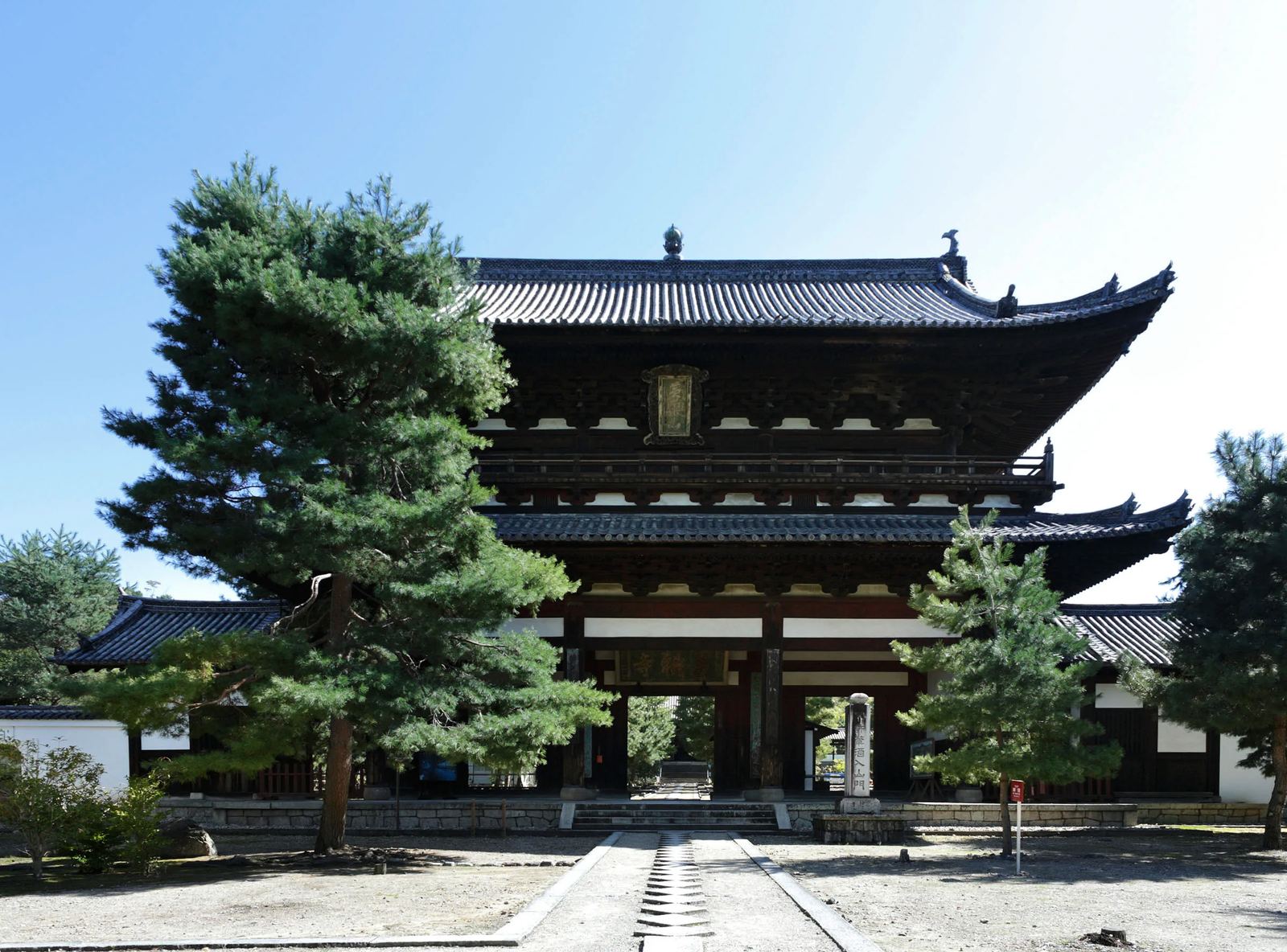
From the gate to the Dharma Hall, in a straight line.
- Sōmon (outer gate)Important Cultural PropertyA Chinese-style pailou gate. The entrance to Manpukuji.
- Sanmon (main gate)Important Cultural PropertyA two-story gate, three bays wide, with three passages.
- TennōdenNational TreasureThe temple's entrance hall. Enshrines Miroku Bosatsu (Maitreya) in the form of Hotei.
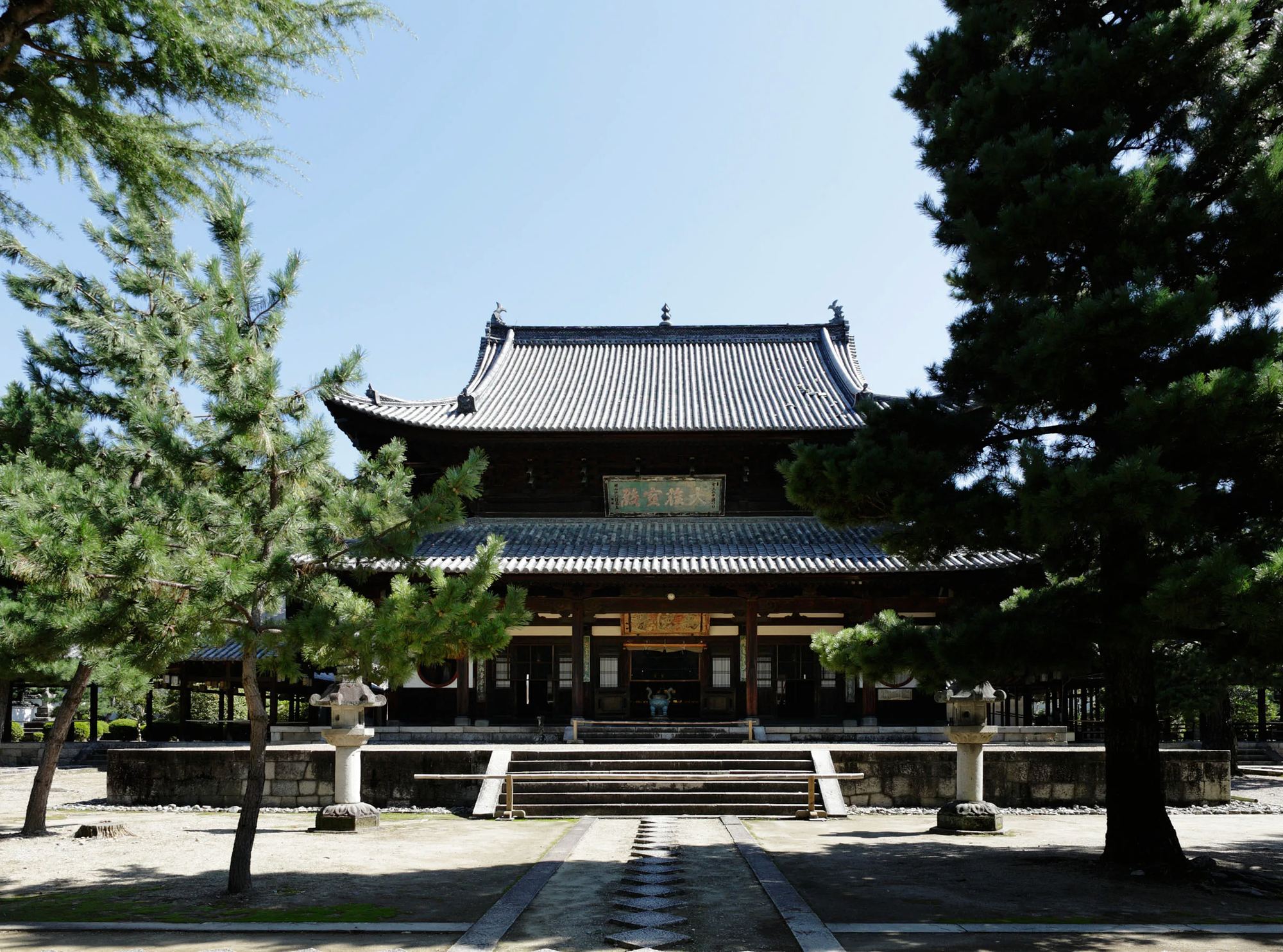
- Daiōhōden (main hall)National TreasureThe main hall. Built of teak, it enshrines Shaka Nyorai and the Eighteen Arhats.
- Hattō (Dharma Hall)National TreasureThe hall for sermons. Its plaque, "Hattō," is in Master Ingen's hand.
More halls stand beside the axis.
- Saidō (dining hall) Important Cultural PropertyThe monks' dining hall. The kaipan and the cloud-shaped gong (unpan) hang before it.
- Kaisandō (Founder's Hall) Important Cultural PropertyThe hall that enshrines Master Ingen.
Through the gate, to the main hall.
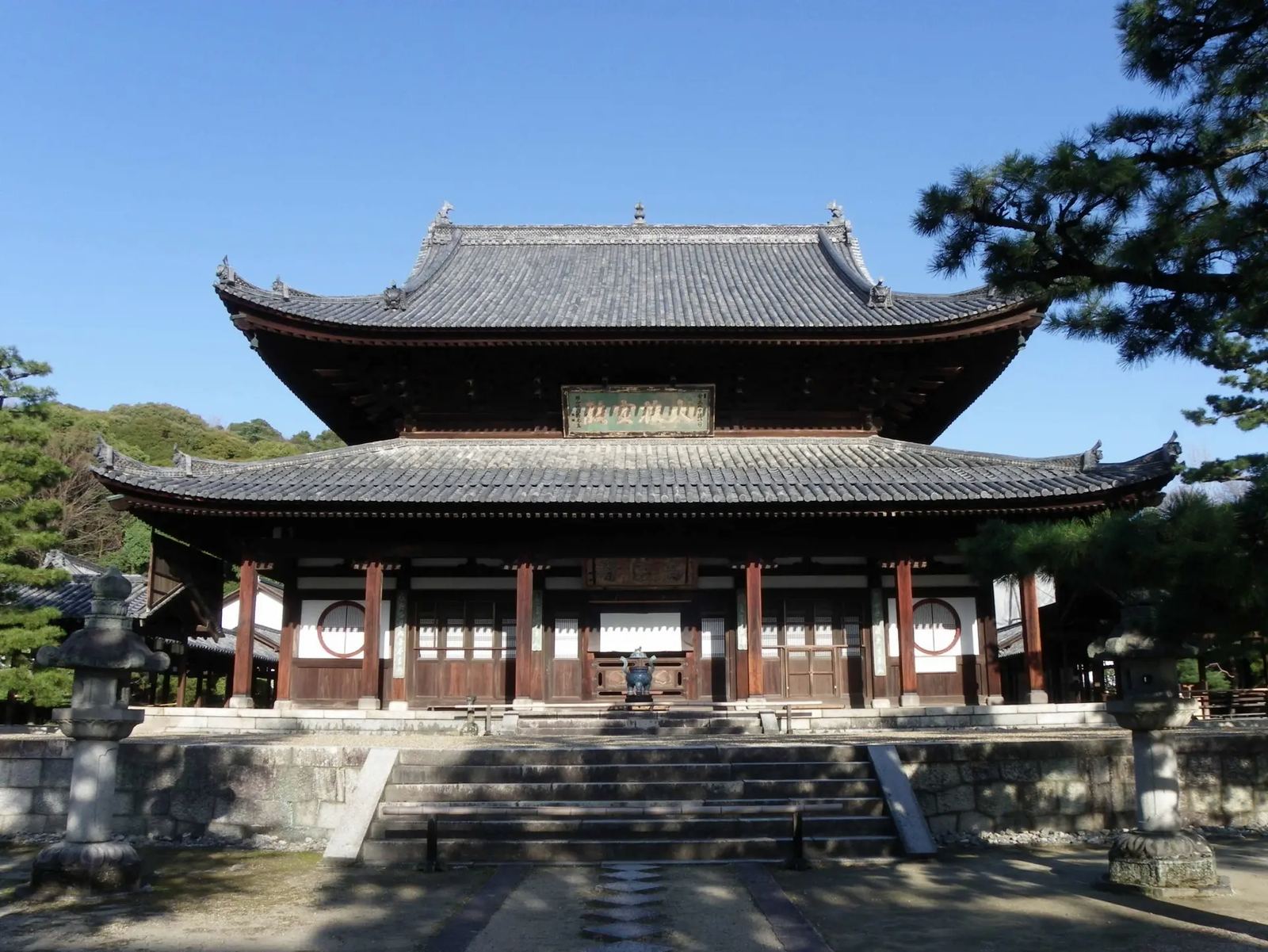
The Daiōhōden is the largest hall of the temple.In Reiwa 6 (2024), it became a National Treasure, with the Tennōden and the Hattō.
Ōbaku design
Forms not seenat Japanese temples.
Facing west
The halls face west, set out in symmetry.
Corridors
Hall is joined to hall by roofed corridors.
Broken manji
On
the balustrades, a pattern of the manji (卍) broken up. Ōbaku ceiling
A ribbed ceiling, curved under the eaves.
Round windows and peach charms
Round windows, and peach-shaped ornaments carved on the doors.
Sekijō
The stone path is a dragon's scales. Only the abbot steps on the diamond-shaped stones.
Visit
Walk through the head temple.
34 Sanbanwari, Gokanoshō, Uji, Kyoto 611-0011For opening hours and fees, see the head temple's site.