Tatebayashi Castle and Master Chōon
Master Chōon and Lord Tsunayoshi.
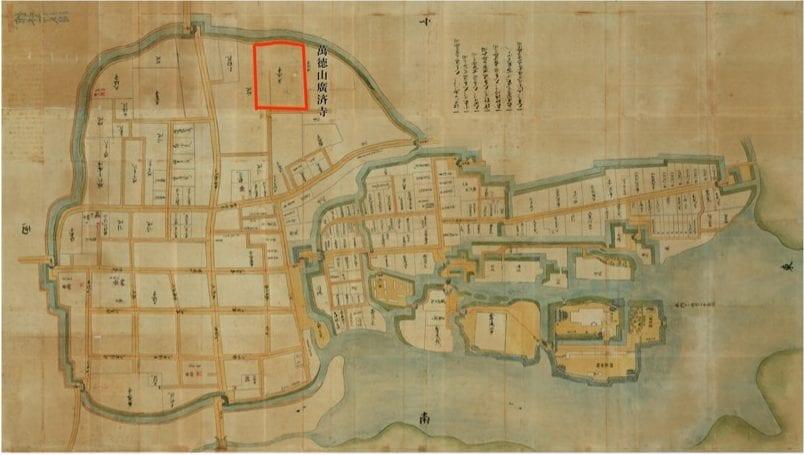
How Kōsaiji came to be.
The Master's preaching at Horinji Temple reached Tatebayashi Castle, and a bond was formed with Lord Tsunayoshi, who would later become the fifth shogun.In an age when building new temples was forbidden, how did Mantokusan Kōsaiji come into being?
Lord Tsunayoshi, lord of Tatebayashi Castle
Lord Tsunayoshi, the fourth son of the third shogun, Tokugawa Iemitsu, became lord of Tatebayashi Castle, with a domain of 250,000 koku, in Kanbun 1 (1661). He served as its lord for about twenty years, until he became the fifth shogun.
But Lord Tsunayoshi did not live in Tatebayashi; he lived at his residence in Kanda, Edo, and so the government of the domain was left to the chief retainer in charge of the castle, Kaneda Tōtōmi-no-kami Masakatsu.
Dharma talks at the castle
Horinji lay within the Tatebayashi domain. When word of Master Chōon at Horinji reached the castle, Kaneda Tōtōmi-no-kami and the senior retainer Honda Jinzaemon said, “If Zen Master Chōon, who is so well spoken of in Edo these days, is in our domain, we would like to invite him to the castle and hear him teach the Dharma,” and sent for him.
The Dharma assembly at the castle went on for more than twenty days, and a great many people, beginning with Kaneda Tōtōmi-no-kami, became his followers.
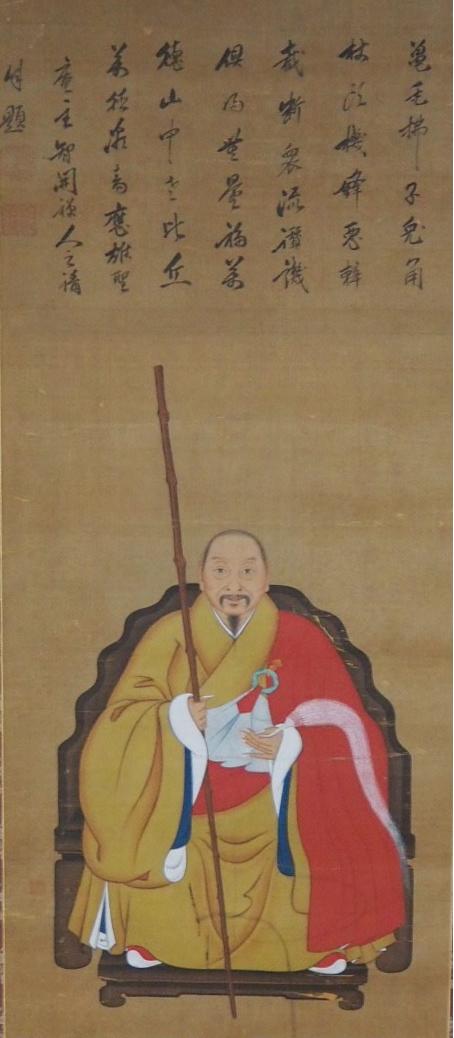
By Kita Genki · Important Cultural Property designated by the town of Chiyoda
The senior retainers' wish
“So eminent a monk is sure, before long, to be welcomed somewhere else and leave Tatebayashi. Is there no way to keep him in our domain?”
The senior retainers thought of building a temple and welcoming the Master as its abbot. Muroga Shimōsa-no-kami, Soga Iyo-no-kami, Kuroda Shinano-no-kami, Matsuura Ōsumi-no-kami and Kaneda Tōtōmi-no-kami went together to the residence in Kanda, Edo, and laid the matter before Lord Tsunayoshi.
Under the ban
At that time the laws governing temples forbade the building of new temples (the ban on building new temples of Kan'ei 8, 1631). A temple could be built only in the name of reviving a former site or rebuilding a ruined temple.
So it was decided to build the temple in the form of reviving the former site of Ryūganji Temple.
The verse “Recording My Joy” (志喜)
On hearing that a new temple was to be built, Master Chōon left the following verse, titled “Recording My Joy.”
賢君頒賜祇園地
興建三寳固国基
自受霊山先佛嘱
現身處々作藩籬
The mountain Mantoku, the temple Kōsai
Master Chōon at once sent his attendant Jusanshun to Ōbakusan to ask Zen Master Mokuan Shōtō (Muan Xingtao, 1611–1684) to become the founding abbot of the new temple. Master Mokuan agreed and at once gave it its names, “the mountain, Mantoku; the temple, Kōsai,” wrote the characters for the tablets bearing its mountain name and temple name, and sent them with a verse of congratulation.
In Kanbun 9 (1669), Mantokusan Kōsaiji was opened in the castle town on about 9,000 tsubo of land, and when the abbot's quarters, the meditation hall and the dining hall were finished, Master Chōon was installed as its second abbot. It is recorded that in the spring of that year more than 600 people gathered for a precepts ceremony held at Horinji, and that when it was held again at the request of Yoshida Daiki, more than 10,000 came.
Temple buildings completed over nine years
It took another nine years for all the halls to be completed. Many of the Buddhist statues were carved by Kōyū Hōgen, the great sculptor of Buddhist images of Shichijō in Kyoto. The statue of the bodhisattva Kannon in the meditation hall was the gift of Kaneda Tōtōmi-no-kami. For the principal image, the Śākyamuni triad, Muroga Shimōsa-no-kami had the Buddha Śākyamuni made, Sano Kichinojō the Venerable Ānanda and Watanabe Heizaemon the Venerable Kāśyapa, and they offered them with prayers for Lord Tsunayoshi's lasting fortune in arms and the prosperity of his house.
The senior retainer Kuroda Shinano-no-kami had the temple bell cast and built a bell tower. The inscription on the bell was written by Master Mokuan and is dated Kanbun 10 (1670).
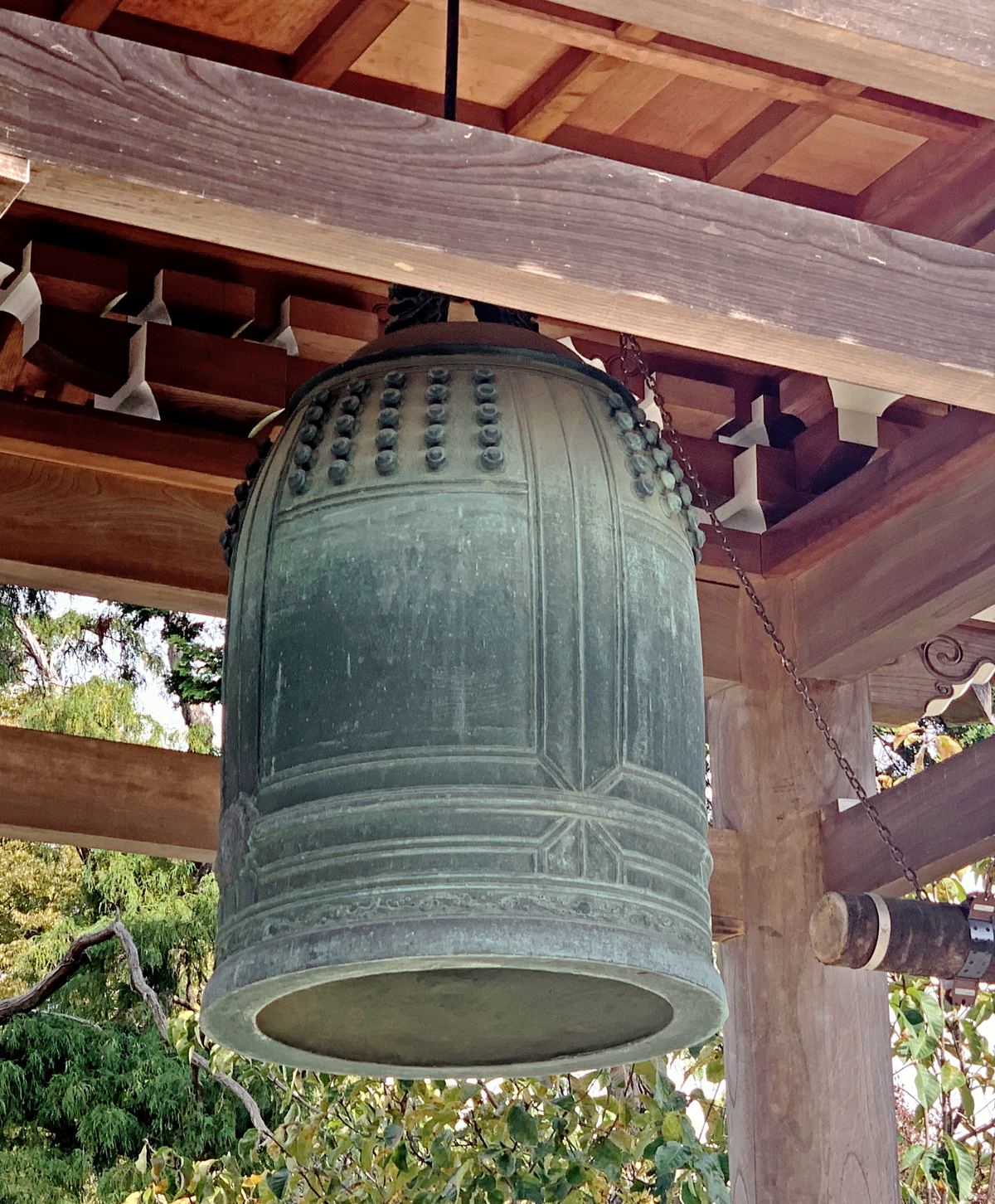
The bell Kuroda Shinano-no-kami had cast · Important Cultural Property designated by the town of Chiyoda
From Kōsaiji to Horinji
In Tenna 3 (1683), when the young lord Tokumatsu, who had succeeded Lord Tsunayoshi, died, Tatebayashi Castle was abandoned, and Mantokusan Kōsaiji was pulled down.
Because Master Chōon was the abbot of Horinji, the Buddhist statues, the temple bell and other things were moved to Horinji.
Record · Tatebayashi Castle
A record of the castle where the story took place.
| Other name | Obiki Castle |
|---|---|
| Built by | Said to be Akai Terumitsu |
| Built | 1530 (accounts differ) |
| Abandoned | 1874 |
| Type | A flatland castle combining the teikaku and renkaku layouts |
| House | Lord | Term | Yield (koku) |
|---|---|---|---|
| Sakakibara | Sakakibara Yasumasa | Tenshō 18 (1590) – Keichō 11 (1606) | 100,000 koku |
| Sakakibara | Sakakibara Yasukatsu | Keichō 11 (1606) – Genna 1 (1615) | 100,000 koku |
| Sakakibara | Sakakibara Tadatsugu | Genna 1 (1615) – Kan'ei 20 (1643) | 110,000 koku |
| Ogyū Matsudaira | Matsudaira Norinaga | Shōhō 1 (1644) – Jōō 3 (1654) | 60,000 koku |
| Ogyū Matsudaira | Matsudaira Norihisa | Jōō 3 (1654) – Kanbun 1 (1661) | 53,000 koku |
| Tatebayashi Tokugawa | Tokugawa Tsunayoshi | Kanbun 1 (1661) – Enpō 8 (1680) | 250,000 koku |
| Tatebayashi Tokugawa | Tokugawa Tokumatsu | Enpō 8 (1680) – Tenna 3 (1683) | 250,000 koku |
| Ochi Matsudaira | Matsudaira Kiyotake | Hōei 4 (1707) – Kyōhō 9 (1724) | 54,000 koku |
| Ochi Matsudaira | Matsudaira Takemasa | Kyōhō 9 (1724) – Kyōhō 13 (1728) | 54,000 koku |
| Ōta | Ōta Sukeharu | Kyōhō 13 (1728) – Kyōhō 19 (1734) | 50,000 koku |
| Ōta | Ōta Suketoshi | Genbun 5 (1740) – Enkyō 3 (1746) | 50,000 koku |
| Ochi Matsudaira | Matsudaira Takechika | Enkyō 3 (1746) – An'ei 8 (1779) | 61,000 koku |
| Ochi Matsudaira | Matsudaira Takehiro | An'ei 8 (1779) – Tenmei 4 (1784) | 61,000 koku |
| Ochi Matsudaira | Matsudaira Nariatsu | Tenmei 4 (1784) – Tenpō 7 (1836) | 61,000 koku |
| Inoue | Inoue Masaharu | Tenpō 7 (1836) – Kōka 2 (1845) | 60,000 koku |
| Akimoto | Akimoto Yukitomo | Kōka 2 (1845) – Genji 1 (1864) | 60,000 koku |
| Akimoto | Akimoto Hirotomo | Genji 1 (1864) – Meiji 2 (1869) | 60,000 koku |