Paintings
The back says “Chō Densu.”
But
the brush is not his.
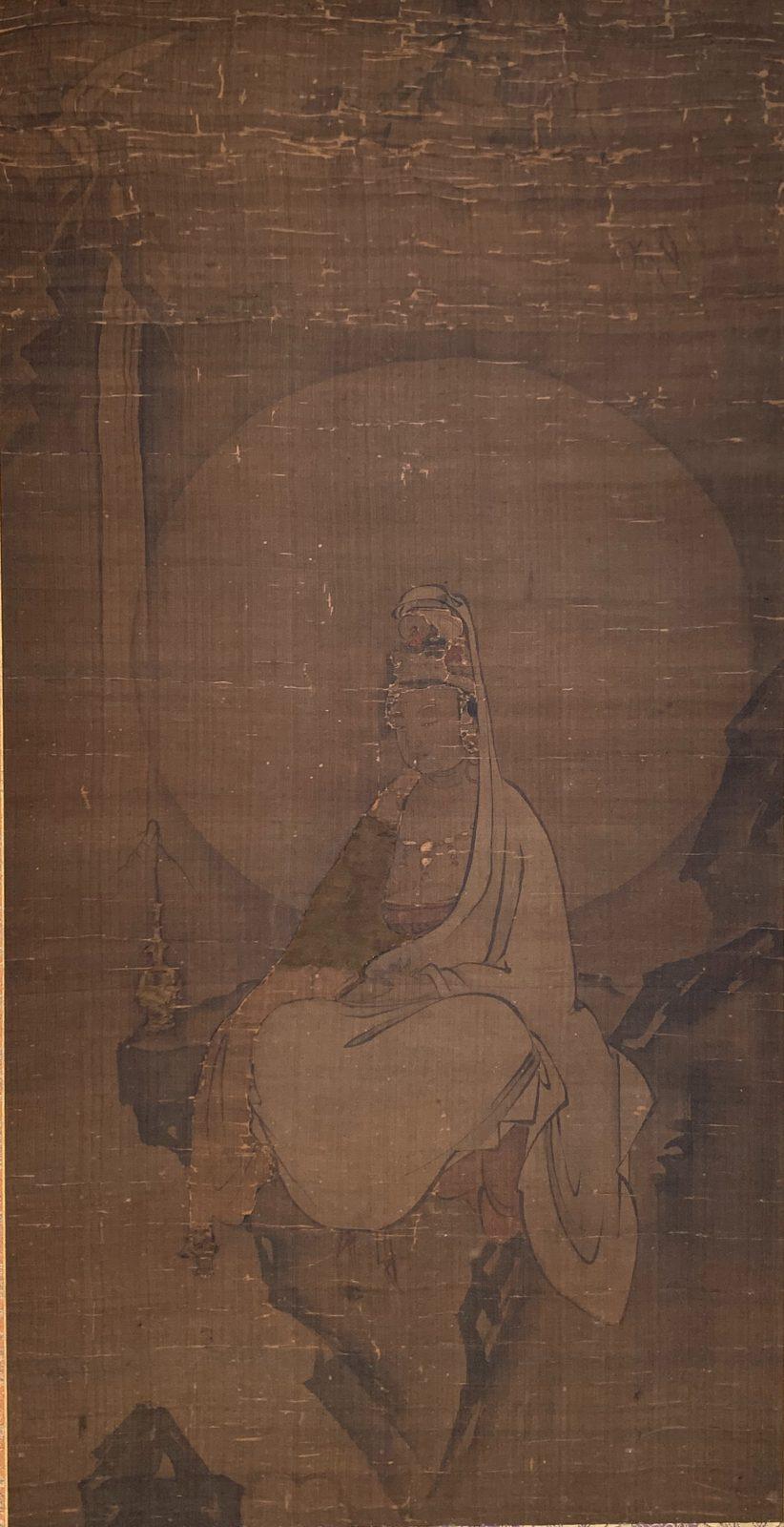
Since the Edo period, the White-robed Kannon (Byakue Kannon) of Horinji Templehas been handed down as the work of Minchō, a painter-monk of the Muromachi period.What recent surveys have begun to show is something older.
Neither of the two paintings is usually shown to the public.
Q1Whose work it has been said to be
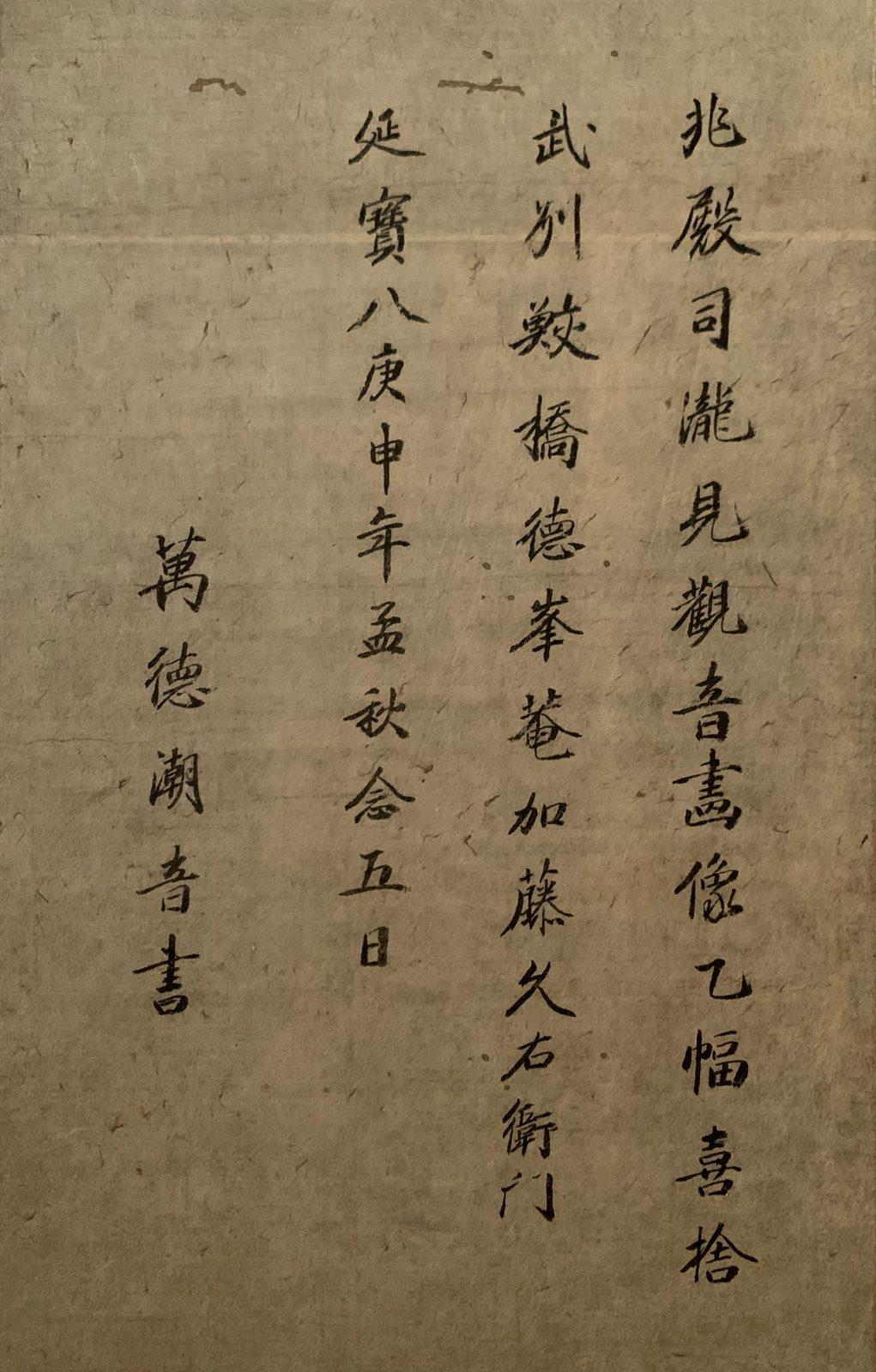
On the back of the scroll,
a note by Zen Master Chōon.
“One painting of the Waterfall-viewing Kannon (Takimi Kannon) by Chō Densuwas given in offering by Katō Kyūemon of Tokuhōan, Samegahashi, in Musashi Province.”Master Chōon wrote this when the painting was given to Kōsaiji Templein Enpō 8 (1680).
Q2Who was Chō Densu?
The painter-monk of Tōfukuji Temple,
Kitsuzan Minchō.
Kitsuzan Minchō (1352–1431) was a painter-monk of Tōfukuji in Kyoto.Because he served as densu, the monk in charge of the Buddha hall,he was called Chō Densu.Known for the great Nirvana painting and the paintings of the Five Hundred Arhats handed down at Tōfukuji,he painted Buddhist pictures with strong lines of ink and rich color.
Q3Why can we say it is not his?
Three clues.
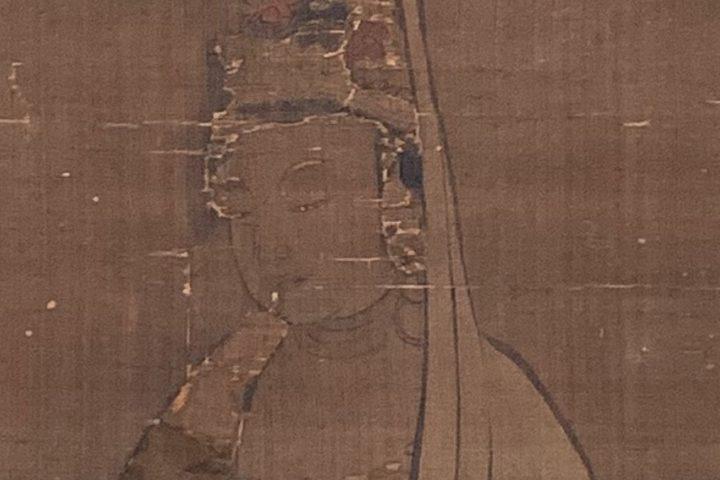
The brushwork
The way the brush moves, the brushwork, differs from Minchō's.
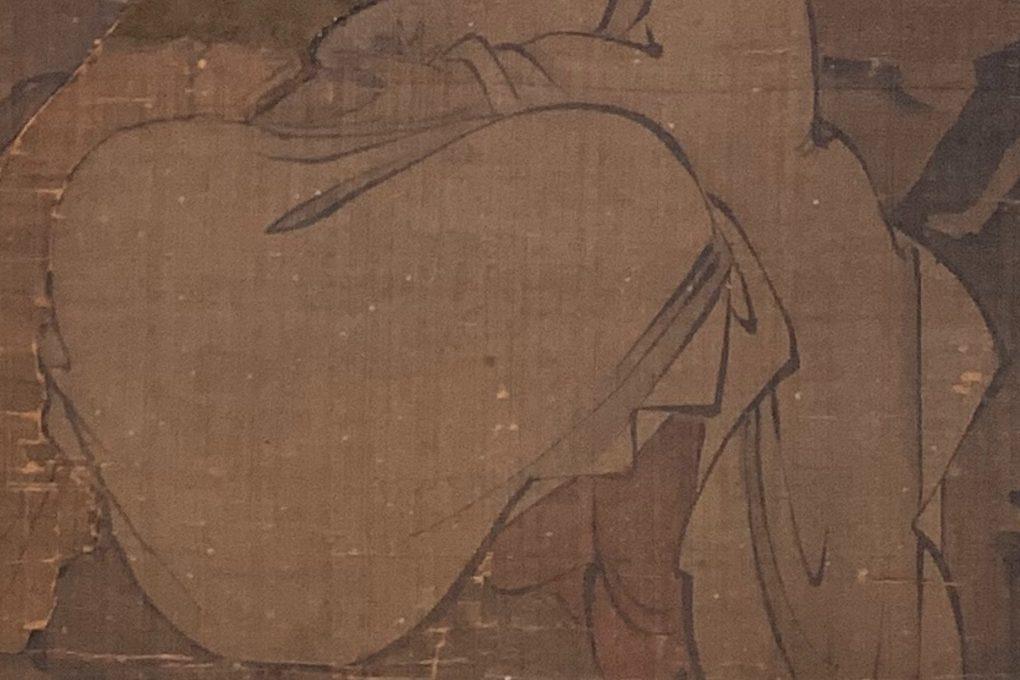
The form of the figure
The hem of the robe hangs in the shape of an “M,” and two sash cords hang down: a form very close to that of White-robed Kannon paintings of the 14th century.
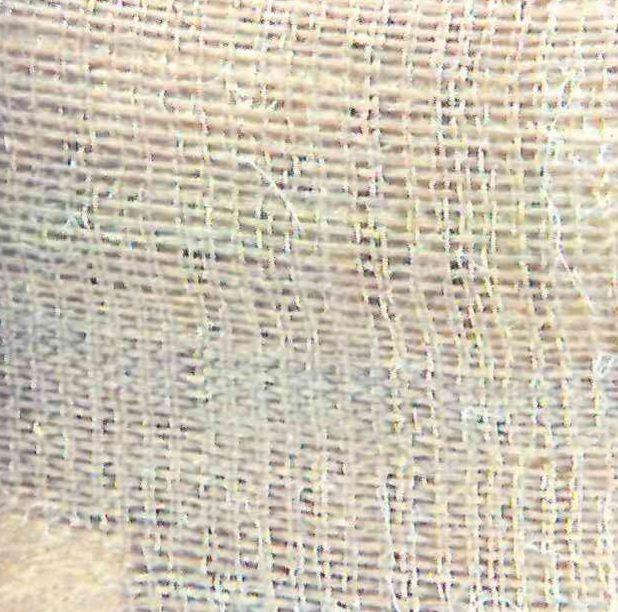
The fineness of the silk
It uses silk thread so fine that none like it is found even among paintings of the 13th to 15th centuries.
The answer
It may be a painting
from before Minchō.
The painting is thought to have been made between the early and the middle 14th century:around 1352, when Minchō was born, or before.A rare example that shows the White-robed Kannon as it was painted in its early days,it is valued as an unusual work that sets a Kannon in color within a landscape in ink.
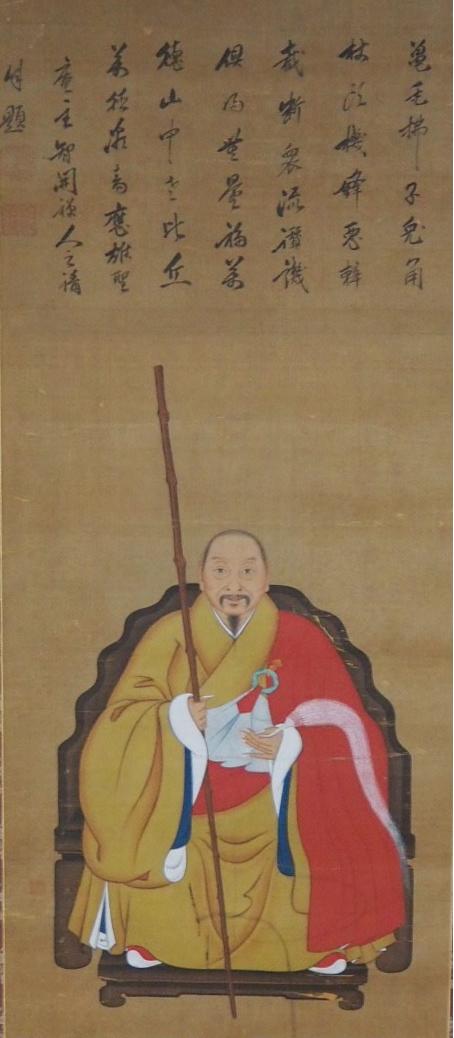
One more painting
Master Chōon, who wrote the note:
a portrait of the man himself.
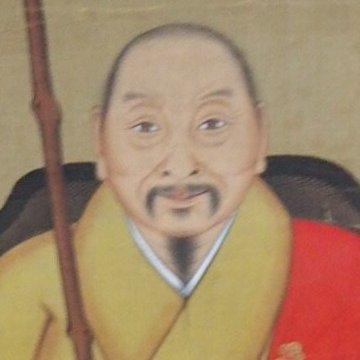
Zen Master Chōon Dōkai (1628–1695) wrote the note on the back of the White-robed Kannon.His likeness was painted by Kita Genki, a painter renowned for his Ōbaku portraits.It is a chinsō (a portrait of a Zen master) facing straight ahead, in the manner of the Ōbaku school alone, with the Master's own inscription above.From its signature, “Mantoku Chōon,” it is thought to have been made while he was at Kōsaiji,between Kanbun 9 and Tenna 3 (1669–1683).
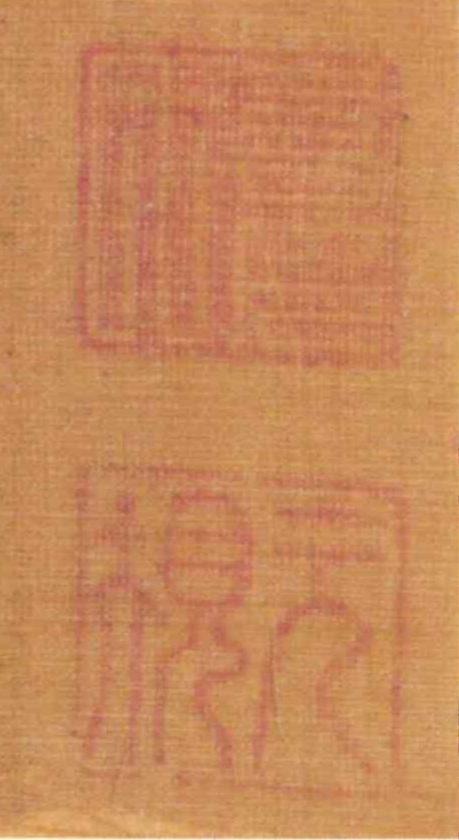
His own inscription
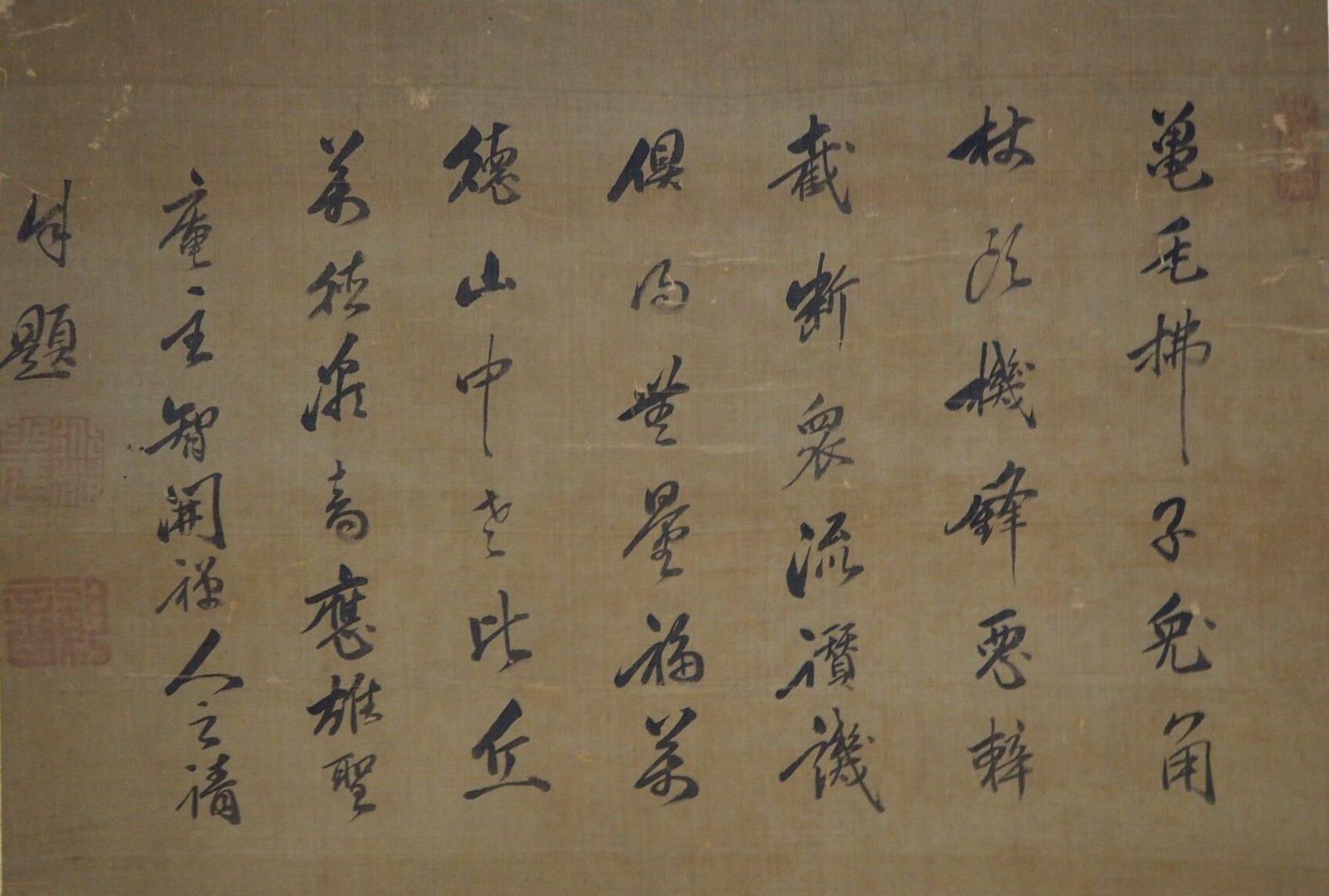
亀毛拂子
兎角杖頭 A whisk of tortoise hair, a staff of rabbit horn. The figure painted here, too, is something that does not truly exist.
機鋒悪辣
截断衆流 With the sharp, stern working of Zen, it cuts off the streams of delusion.
讃譏倶得無量福
Whether praised or reviled, both are boundless blessings.
萬徳山中老比丘
An old monk on Mantokusan (Kōsaiji).
Written by Mantoku Chōon at the request of Chikai Zennin, master of the hermitage Yūshōan.
Records of the works
White-robed Kannon
- Technique
- Color on silk (ink and color)
- Size
- 76.6 cm high, 39.3 cm wide (the painting itself)
- Period
- 14th century (Kamakura to Nanbokuchō period)
- Painter
- Unknown (the back says “Chō Densu”)
- Provenance
- Donated to Kōsaiji in Enpō 8 (1680); later to Horinji
- Mounting
- Framed (originally a hanging scroll)
Portrait of Zen Master Chōon
- Technique
- Color on silk; hanging scroll
- Size
- 117.3 cm high, 50.9 cm wide (the painting itself)
- Period
- Late 17th century (Edo period)
- Painter
- Painted by Kita Genki / inscribed by Master Chōon himself
- Seals
- “Kita-shi” (喜多氏), “Genki” (元規) / “Dōkai no in” (道海之印), “Chōon” (潮音), “Rinzai Shōshū” (臨済正宗)
The assessment of the works is based on the survey reports of the Center for the Promotion of Cultural Properties and the Tokyo National Museum.