Stories

The Story of Zen Master Mokuan

Zen Master Mokuan Shōtō (1611–1684) 25 chapters

The story of Zen Master Mokuan Shōtō, Master Chōon's teacher and the second abbot of Ōbakusan Manpukuji. His name is cast on Horinji's temple bell.
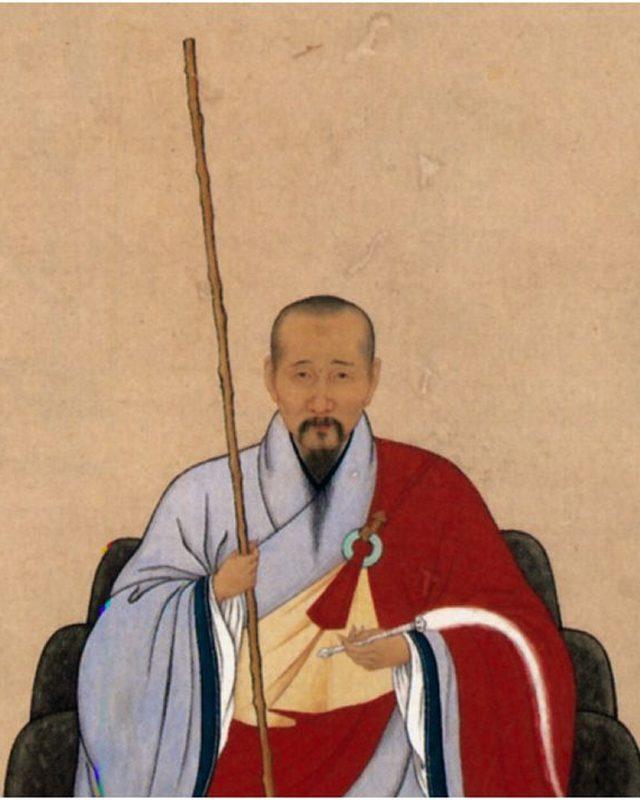
Zen Master Mokuan Shōtō

Part 1

Childhood and ordination

Chapters 1–6

Chapter 1

Ōbakusan Manpukuji
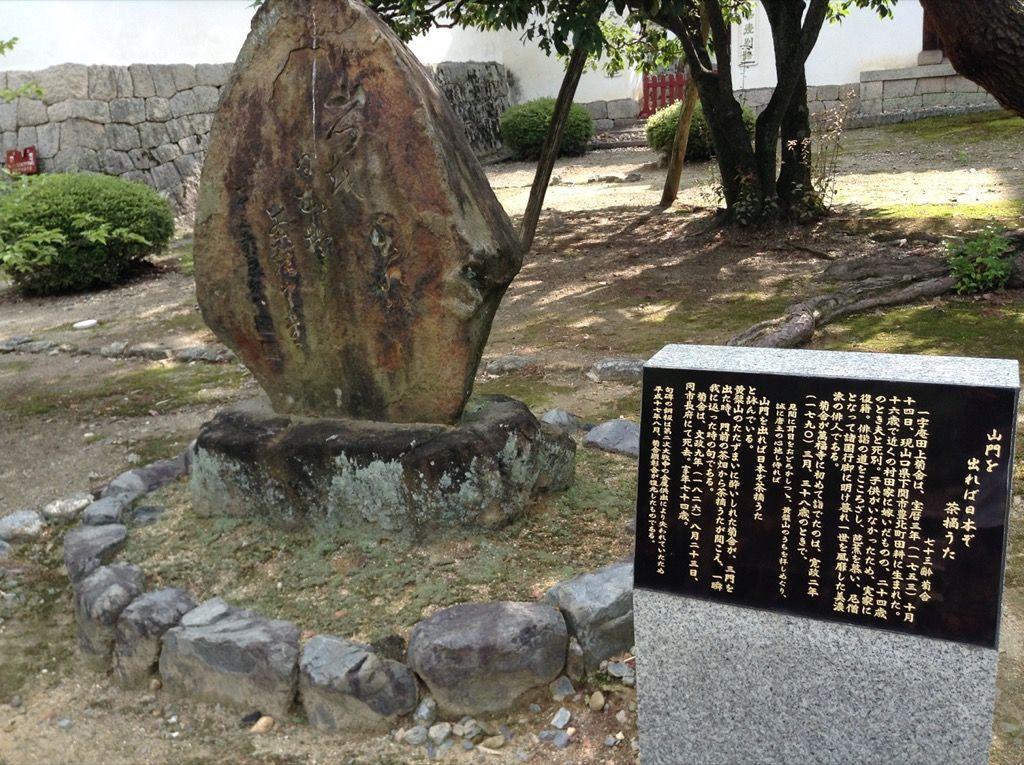
Kikusha's haiku stone (Ōbakusan Manpukuji)

The southern outskirts of Kyoto. The village of Uji has been known since the Heian period as a place where the nobility had their villas. Visit the area today and you can see the halls of Byōdōin Temple, which show the splendor of that age, and many remains that call to mind the temples and shrines of those days.

Among them there is one precinct where a temple complex (the buildings of a temple) of a strikingly different character stands at the foot of Goun Peak (Goun-pō), where the fragrance of Uji tea drifts, its majestic tiled roofs rising high into the sky. The haiku poet Kikusha wrote:

"Step out through the main gate, and it is Japan: a tea-picking song" (山門を出れば日本ぞ茶摘うた)

Just as the poem says, once you set foot in the grounds of this temple, buildings unfold one after another that make you wonder whether China itself has appeared here. This temple is Ōbakusan Manpukuji, founded in the Kanbun era (1661–1673) by Zen Master Ingen Ryūki (Yinyuan Longqi). It was the second patriarch, Zen Master Mokuan Shōtō (Muan Xingtao, 1611–1684), whose story is about to be told, who brought the main gate and many of the temple's other buildings into the form we see before us today.

Chapter 2

The birth of Master Mokuan

Master Mokuan was born on the third day of the second month of Wanli 39 (1611), in the reign of Emperor Shenzong, when China's Ming dynasty was drawing toward its end. In Japan it was the time when Emperor Go-Mizunoo had come to the throne and Tokugawa Ieyasu, together with the second shogun, Hidetada, was steadily laying the foundations of the Tokugawa shogunate. Ieyasu died five years later.

Master Mokuan was born in Jinjiang in Quanzhou Prefecture, which flourished as a trading port of southern China. His father's name was Wu Qing (Gokei), and his mother had come as a bride from the Wu family. When he was born and his parents looked closely at his face, two teeth were showing at his upper lip, and so he came to be called "Little Bodhidharma" (Daruma-san). One might say he was a Zen monk from birth.

At the age of four he lost his mother, and before that grief had healed, the following year he lost his father as well, and came to be raised by his grandmother, of the Su family.

Chapter 3

A disciple at Kaiyuan Temple

When he was about ten, he happened to hear someone chanting the name of the bodhisattva Guanyin (Kannon) and was deeply moved; from then on he gave up eating meat and began to chant the name of Guanyin himself. In his thirteenth year he visited Kaiyuan Temple in the same district, where he entered the Buddha hall and bowed before the principal image, and walked around the pagodas in worship. Struck by the purity of the Buddha's world, he came to wish that one day he would surely escape from the secular world, leave home and become a monk.

Seeing how firm the Master's resolve to leave home was, when he turned sixteen his grandmother asked Master Yinming of Kaiyuan Temple, and he was allowed to become his disciple.

"Now that I have become a monk in order to follow the Buddha's teaching, I cannot rest until I have put it into practice, point by point," he vowed in his heart; he kept the Buddhist precepts strictly and studied the Buddha's teaching earnestly.

Chapter 4

Taught by a heavenly deity

Yet Buddhist learning alone still left him somehow unsatisfied, and so at the age of eighteen he climbed to Lion's Head Rock (Shitouyan) on the mountain north of the temple and sat alone in zazen (seated meditation), staving off hunger with only three dried persimmon cakes a day. On the third day after he began his zazen, a divine being appeared in the moonlight and said, "I am a heavenly deity. You are young, and it seems you do not yet know the right way to practice the Buddha's path. Hurry back to the temple, shave your head, take refuge in the Buddha and receive the precepts, and follow the teaching of the masters and let them open your eyes. This is the right way to practice Buddhism." No sooner had he spoken than he had vanished from sight. The next morning the Master went straight back to the temple, and on the eighth day of the twelfth month of the following year, the day of the Buddha's awakening (the day on which the Buddha attained enlightenment), he shaved his head; and when he turned twenty he received the ten precepts from Great Master Qiaoyun (Shōun) of Bizhiyan (Hekishigan), and began to read the Buddhist canon (the great collection of Buddhist scriptures).

Chapter 5

Setting a great turtle free

One day around that time, Master Mokuan happened to go out into the town, and in the market a great turtle about four chi long (one chi was 31.1 centimeters in the Ming period) had been put up for sale. Master Mokuan at once paid the money, bought the turtle and released it into the river, and the turtle turned to look back again and again, as if it were saying thank you. Master Mokuan said,

"Believe in and deeply revere the Three Treasures, the Buddha, the Dharma and the Sangha; escape forever from the rough waves of this floating world, and attain buddhahood."

At these words the turtle went off as if dancing over the waves. The people who had been watching nearby all cried out in admiration.

When he was twenty-two, Great Master Qiaoyun, the master who had ordained him (his first teacher), passed away. That year he bought rice fields for his grandmother so that she would have no worries in her old age, and he also built a small hall for the rites for his ancestors. The following year Master Mokuan's patron, the Supervising Secretary Fu Youxin (Kyūkan Yōshin Fukō), built the Mituo Hermitage and presented it to him, and on the day it was completed he celebrated by reciting the Lotus Sutra.

Chapter 6

The golden lotus flowers

One evening at dusk, as he sat in zazen, an indescribable fragrance suddenly drifted from golden lotus flowers and filled the whole of the Mituo Hermitage; Master Mokuan's body and mind grew clear and bright, and white sweat poured from his whole body like rain. When Master Mokuan realized that this was by no means the realm of a buddha but the work of a demon, the golden lotus flowers that had been there vanished in an instant, and the fragrance was gone as well. He understood that such wondrous sights are no more than delusions of the mind: such phantoms are born because the mind imagines them so.

In Chongzhen 8 (1635), Kaiyuan Temple welcomed Master Yongjue of Mount Gu as its abbot. Master Mokuan at once engaged Master Yongjue in Zen questions and answers, but the knot of doubt within him only grew larger; even when he sat in zazen, he would suddenly find himself wide awake in the middle of the night, uneasy and unable to settle. To resolve this cloud in his mind, in the autumn of his twenty-sixth year he set out on a pilgrimage on foot (a journey of training).

Part 2

Training and the transmission

Chapters 7–12

Chapter 7

One way of living as a Zen monk

First, at Jiedai Temple in Hangzhou, he met Master Xueguan and exchanged Zen questions and answers with him, and then at Longshu Temple he heard Dharma Master Xuesong lecture on the Śūraṅgama Sutra, but he could not attain awakening, and his anguish only grew. One day he confided this to a Zen friend, a companion in training.
"I have made every effort I could, but even now I do not well understand the doctrines of Buddhism, and though I have practiced Zen earnestly, I do not seem likely to awaken. What am I to do?"
he said. Then the friend replied,
"Even if awakening is not attained, to spend one's whole life with a pure heart, single-mindedly and never neglecting the practice of Zen: is that not also one way of living as a Zen monk?"
At these words Master Mokuan was startled, and felt as though his heart were opening.
The Master took heart again, went to Mount Tiantong and practiced Zen under the Venerable Miyun.

Chapter 8

Thirteen days of zazen

At the age of twenty-seven, under Master Yongjue and following his instruction, Master Mokuan threw himself into zazen for a set term of thirteen days, making no distinction between day and night and forgetting sleep and food. On the second day he came to feel as though it were dusk, and when the third day came his whole body suddenly grew light and perfectly clear. The kōan (a Zen question) and he himself became one, and though he tried to shake it off he could not. Then came the night of the thirteenth day, when the term was fulfilled. He rose from his zazen seat and was walking along behind the others when the lamp on the Buddhist altar sent its flame leaping up, and he felt as though he were gazing at his own figure moving within the shadow of that lamp. At that moment his mind opened out wide and clear, and he felt he had touched the something that had been lodged in his heart until then. Once this something was understood in a flash, his heart grew as light as when heavy iron shackles are taken off, and that lightness could be compared to nothing at all.

Chapter 9

Ginger and a fist

The following year he again set out on pilgrimage, with Master Yong'an, to West Lake, where he met Master Ruo'an, and then Master Sanyi at Longmen, and then Master Shiyu at Baoshou, meeting them one after another and exchanging Zen questions and answers. Then he happened to hear that the Venerable Feiyin had come to Mount Jinsu, and he hurried there. One day the Venerable Feiyin asked the Master, who at that time held the office of assistant prior (the temple's treasurer),

"You there, did you bring the ginger with you?"

So he asked. Then Master Mokuan answered,

"I have brought it, and it is ready to be of use at any time."

At this answer the Venerable Feiyin said,

"Then let us have it out here at once."

Master Mokuan swiftly raised his fist. Without a moment's pause the Venerable Feiyin said,

"What is that supposed to be?"

Then Master Mokuan replied,

"Every single slice of this ginger is sharp and hot."

Chapter 10

Climbing Mount Huangbo in China

Master Ingen, whom he had once met under the Venerable Feiyin, was serving as abbot on Mount Huangbo. Master Mokuan climbed Mount Huangbo and stayed there. One day he asked,

"To lay one's body down in the midst of a blazing field: please teach me about such a case."

At this request Master Ingen suddenly dealt him a blow with his staff. Undaunted, Master Mokuan asked,

"And if one should meet a person so excellent as to surpass the buddhas and surpass the patriarchs, what is one to do?"

To this Master Ingen said,

"Surely everyone would hold out their hands and welcome him with joy."

Hearing this, Master Mokuan said,

"If that is so, then the twelve peaks that surround this Mount Huangbo will surely all bow their heads and nod as well."

Such was his answer.

Chapter 11

Receiving the whisk

Next, Master Mokuan, who had been appointed to the weighty office called West Hall (seidō), said: "A Zen practitioner forged in a furnace blazing red must surely have the strength to lift up even the heavens, but I will not ask about that now. The certification of awakening (inka), which is given as the seal of what the buddhas and patriarchs awakened to, ought to be granted to one who surpasses all others. It is about this that I ask."

So he asked, and after that Master Mokuan and Master Ingen exchanged questions and answers, and Master Mokuan was firmly recognized as a Zen practitioner worthy of inheriting the Dharma.

On the first day of spring the following year, Master Mokuan took up the whisk and preached (hinpotsu) in place of Master Ingen, and when the spring training period ended he was welcomed as abbot of Taiping Temple at Lianshi. Master Ingen called Master Mokuan to the abbot's quarters, took a whisk (hossu) in his hand, said, "When you meet people, see that you do not use it wrongly," and handed him the whisk.

Master Mokuan was by then already forty years old.

Chapter 12

Abbot of Taiping Temple

Taiping Temple was surrounded by mountains of dripping green. In the time he could spare from zazen, Master Mokuan planted rice, sowed vegetable seeds, carried earth in a basket (mokko) on his back and gathered firewood, and so built up his practice after awakening. When a monk asked, "What Zen teaching did Master Ingen hand on to you?" Master Mokuan answered, "I am here peeling the husks off bamboo shoots." And no sooner had the monk pressed on, "And once you have peeled the bamboo shoots, what will you do?" than Master Mokuan gave him a sound blow.

In the three years he served as abbot here, the Buddha hall was splendidly restored and the monks' quarters were completed, and so he handed the temple over to his younger Dharma brother Master Sokuhi Nyoitsu (Jifei Ruyi) and moved on to be abbot of Huiming Temple on Mount Xiang, to which he had long been invited again and again with great insistence.

Part 3

To Japan

Chapters 13–19

Chapter 13

Crossing to Japan

When a little more than a year had passed since he became abbot of Huiming Temple, a letter in Master Ingen's own hand arrived, saying, "Cross the sea, come to Japan and help with the work of teaching." Master Mokuan said, "This is the bidding of my master, who is in Japan, so I cannot go against it," and on the ninth day of the seventh month, in the summer of his forty-fifth year, he crossed the sea and landed at Nagasaki, where he was met and entered Fukusaiji Temple.

Exactly one month later, on the ninth day of the eighth month, Master Ingen set out for Fumonji Temple in Settsu, Osaka, and so Master Mokuan accompanied him as far as Isahaya and grieved at this hurried parting of master and disciple in a foreign land; but on the sixteenth day of the second month of the following year he welcomed his younger Dharma brother Master Sokuhi to Nagasaki and rejoiced at their reunion.

When the winter training period ended, Master Mokuan sealed up the bell and the sounding board and waited for Master Ingen to come back to Nagasaki.

Chapter 14

The two Gates of Sweet Dew in Nagasaki

Master Mokuan and Master Sokuhi were especially close: they composed poems and verses for each other, went out to sea in a boat to talk together, and visited each other at Fukusaiji and Sōfukuji Temple.

And because the two of them devoted themselves vigorously to teaching Zen, the people of Nagasaki revered the two as the "two Gates of Sweet Dew" (ni-kanromon) of the Buddhist world. Sweet dew (kanro) is said to take away people's suffering, preserve long life and bring the dead back to life, and they were so called because people believed in them and looked up to them as men who preached this Dharma of sweet dew to the people.

When autumn came, Master Tetsugyū arrived bringing a writing from Master Ingen and a letter from Master Ryūkei, and told Master Mokuan to come up to Fumonji. Master Mokuan gave his farewell sermon in the hall (jishu jōdō: the last sermon given on stepping down as abbot and parting from one's disciples) and left Nagasaki. At Kokura the lord of the domain, Lord Ogasawara, came out in person to welcome him.

Chapter 15

The founding of Ōbakusan in Japan

When he arrived safely in Osaka, Master Ingen was greatly pleased; in that winter's training period he made him the head of the training monks, and also had him preach in Master Ingen's place. At the start of the second month of the following year, Master Mokuan accompanied Master Ingen to the village of Yamato in Uji, Kyoto Prefecture, to look over the site of the Ōbakusan that was to be newly founded in Japan.

On the eighth day of the fifth month of Kanbun 1 (1661), Ōbakusan Manpukuji was founded, and on the twenty-ninth day of the eighth month Master Ingen went up to Ōbakusan. The following year the ridgepole-raising ceremony was held for the Dharma hall, eleven ken wide (one ken is 1.866 meters) and ten ken deep, and statues of Kannon; of Idaten (Skanda), the guardian of temples; of the Garan deity; of the Patriarch; of Kansai; and of others were made by Fan Daosheng (Han Dōsei).

The next year, Kanbun 3 (1663), the ceremony of opening the hall with prayers for the nation (shukukoku kaidō) was held, and the shogunate gave four hundred koku as provisions for the monks. It goes without saying that Master Mokuan helped Master Ingen and gave his utmost. When the east and west abbot's quarters were built, Master Ingen lived in the east quarters and Master Mokuan in the west quarters.

Chapter 16

Second abbot of Ōbakusan

On the twenty-third day of the eighth month of that year, the meditation hall was built. Master Sokuhi happened to come up to Ōbakusan on that very day, and so in the winter training period Master Mokuan and Master Sokuhi, as head monks of the east and west halls, guided nearly five hundred training monks. In the twelfth month Master Ingen held a precept-giving assembly of the Threefold Platform Precepts (sandankai), and Master Mokuan served in the role of konma ajari (karma-ācārya).

In the ninth month of Kanbun 4 (1664), Master Ingen retired to Shōindō and had Master Mokuan succeed to the seat of second abbot of Ōbakusan. When Master Mokuan held the ceremony of opening the hall with prayers for the nation and became abbot, his younger Dharma brother Master Sokuhi conducted the ceremony as gavel master (byakutsui-shi); its rules and rites were carried out with solemnity, and so splendid was it that everything seemed to have been made completely new, and the monks and lay people in attendance were deeply moved by the newly opened Ōbaku style of Zen. When the ceremony was over, Master Sokuhi returned to Nagasaki.

Chapter 17

Going down to Edo

In the spring of Kanbun 5 (1665), Master Mokuan held a Threefold Platform Precepts assembly (at that time a ceremony of receiving the precepts unique to Ōbaku). On this occasion the Kanrodō was founded behind the east abbot's quarters, the meditation hall was repaired, and stone-paved paths, two storehouses and other things were built.

On the twentieth day of the seventh month a summons came from the shogunate, and so he went down to Edo for the first time and paid his respects on having become abbot of Ōbakusan. On the way he visited his younger Dharma brother Master Dokutan Shōkei (Duzhan Xingying) at Hamamatsu, and after arriving in Edo he made Tentakuji Temple his lodging. When word spread that Master Mokuan had come to Edo, many people crowded in, hoping to meet Master Mokuan if only for a glimpse.

After entering Edo Castle he wrote out Dharma words for the senior councillor Inaba, Lord of Mino, for Lady Keishōin, the shogun's mother, and for others. On the twenty-eighth day of the ninth month he made his second visit to the castle and set out for home. At Odawara he met Master Tetsugyū, and he returned safely to Ōbakusan.

Chapter 18

The Daiōhōden is built

The Daiōhōden, Ōbakusan Manpukuji

In the fifth month of Kanbun 7 (1667), the shogun's house bestowed twenty thousand ryō and teak, a timber from the southern seas, and it was decided to build a Buddha hall. Aoki, Lord of Kai, newly built the Funi-an within Ōbakusan, lived there and supervised the work. The following year construction began on the Daiōhōden (the Buddha hall); on the twenty-fifth day of the third month the ridgepole-raising ceremony was held, and Master Mokuan burned incense and prayed. It was a very large building, thirteen ken wide and eleven ken deep. After it the Tennōden, the Saidō (the dining hall), the bell tower, the Garandō and the Soshidō were also built one after another.

On the eighth day of the twelfth month, as these buildings too were nearly complete, he held seven days of services, and went up to the hall to preach and express his gratitude. In the third month of the following year he went down to Edo and offered his thanks to the shogunate for the happy completion of the buildings. In Edo he conducted a memorial service for the great elder (tairō) Sakai, the great lay Buddhist Kūin, who had rendered great service in the founding of Ōbakusan, and he was invited to preach at the private residences of the daimyo, beginning with the senior councillor Lord Inaba, so that he stayed in Edo for more than a month.

Chapter 19

Zuishōji Temple in Edo

In the Kantō region the Ōbaku school's teaching spread further day by day: in Kōzuke Province (today's Gunma), Mantokusan Kōsaiji was built by Master Chōon Dōkai, and in Edo, Shiunzan Zuishōji welcomed Master Tetsugyū as its abbot. In the fourth month of Kanbun 11 (1671), taking the completion of Zuishōji's buildings as the occasion, he set out for Edo, also to give thanks for the bestowal of the purple robe, which had long been on his mind. On the ninth day of the fifth month he safely entered Zuishōji and held the ceremony of installation as abbot.

Worshippers came without a break, ten thousand in a day, it was said. And because Master Mokuan had come to Edo, high officials of the shogunate, beginning with Sakai Uta-no-kami, prepared otoki (feasts) and invited Master Mokuan to their residences one after another. At this time a zazen assembly was held at Zuishōji, with Master Tetsugyū as head monk and Master Chōon as West Hall.

Just then word was brought that his younger Dharma brother Master Sokuhi had passed away. Master Mokuan grieved deeply, set up a memorial tablet and held a memorial service.

Part 4

Last years

Chapters 20–25

Chapter 20

Master Ingen passes away

On the third day of the fourth month of Enpō 1 (1673), the year Master Mokuan turned sixty-three, Master Ingen, the founding abbot of Ōbaku, passed away. Master Mokuan delivered the Dharma words for the rites of shingan and keshin (hanging up the portrait for veneration). For a hundred days Master Mokuan never lay down to rest in his bed, but sat in zazen day and night without leaving the coffin. He never missed the morning and evening sutra chanting, and he carried the offerings with his own hands. On the seventh day he bought fish and birds and released them into ponds and fields, to repay Master Ingen's great kindness. When the hundred days were over, he escorted Master Ingen's coffin and laid the remains in the stupa, and only then returned to the abbot's quarters and for the first time received the monks' bows as usual.

For almost ten years, from Kanbun 4 (1664), when he succeeded Master Ingen as second abbot of Ōbakusan, until Master Ingen passed away, he served Master Ingen with all his heart; whenever something new or rare came into his hands, he first had Master Ingen partake of it, and would not put it to his own lips until afterward.

Chapter 21

The main gate is built

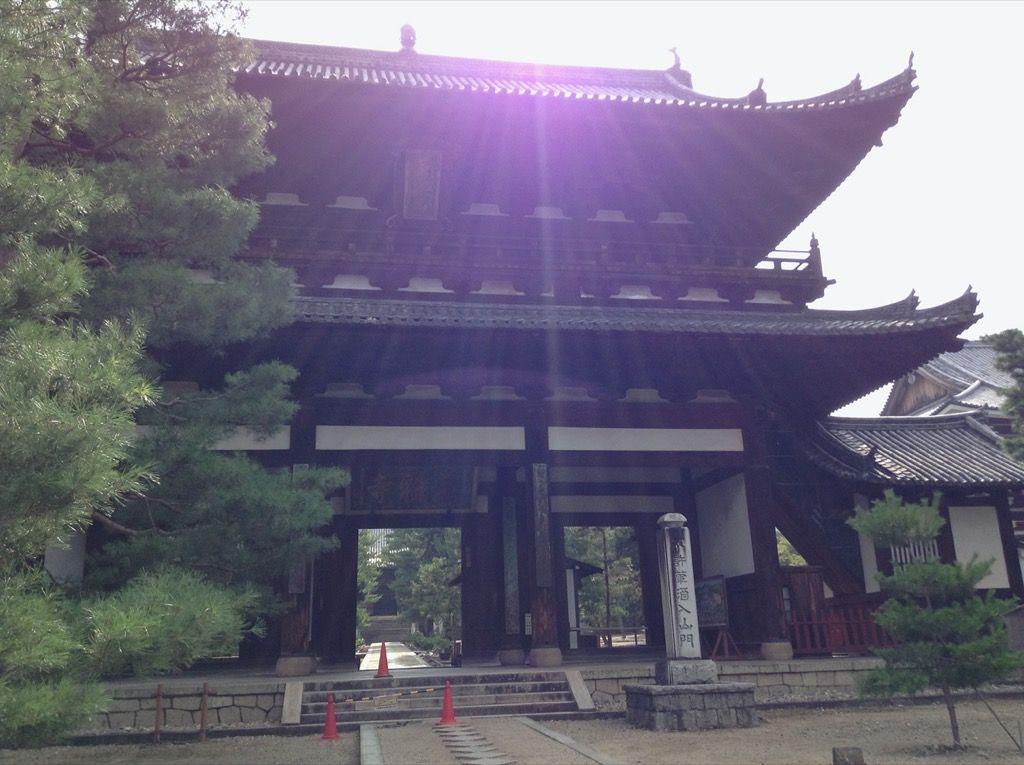
The main gate, Ōbakusan Manpukuji

In the fourth month of Enpō 3 (1675), the ridgepole-raising ceremony was held for the Kaisandō, the founder's hall in which Master Ingen is enshrined, and in the seventh month Manju-in was built to the right of the Kaisandō. In the autumn of Enpō 5 (1677) he moved the abbot's quarters of Shōindō and built fences on all four sides, arranging them so as to guard the Kaisandō and the founder's stupa. He also built the stone steps of the Tennōden, and the stone walls on both sides came to several jō (one jō is 33.11 meters). A water basin more than one jō in length and breadth was set in front of the Tennōden. Worshippers were greatly pleased to rinse their mouths and wash their hands in the cold, clean water.

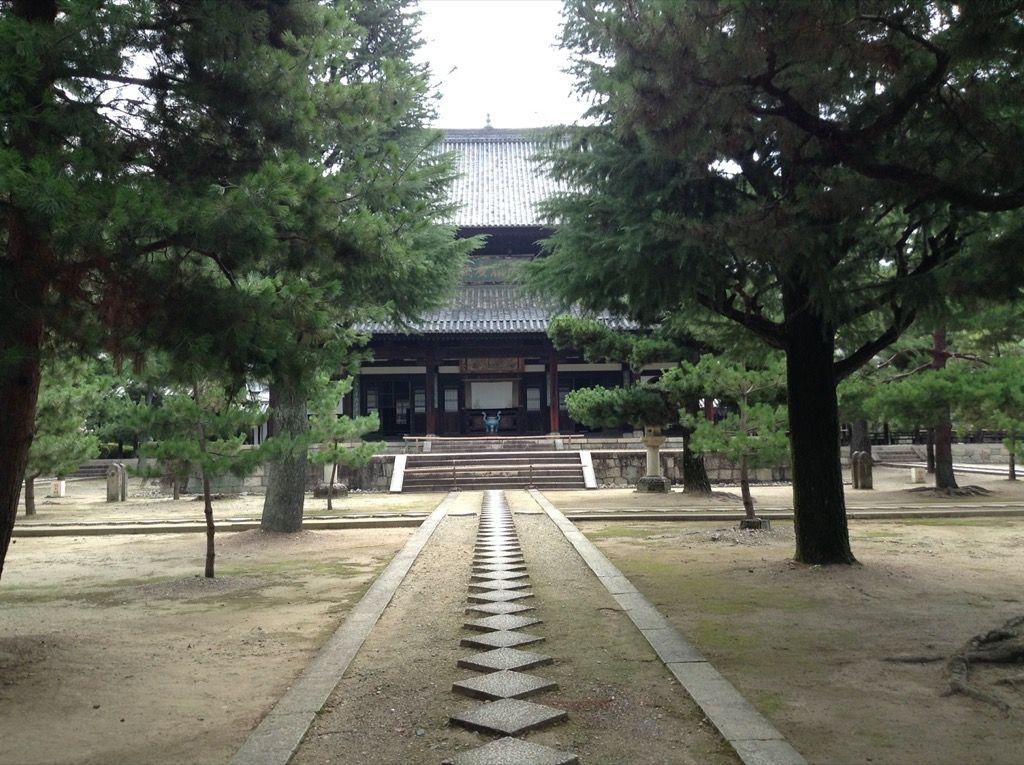
The following year the lay devotee Yokota Dōho of Suruga, in Shizuoka Prefecture, donated ten thousand ryō of silver, and so the main gate (Sanmon) was built. It was a vast structure, 21 cubits deep (one cubit, chū, is 42 centimeters), 33 cubits across and 39 cubits high; on the third day of the fifth month the ridgepole-raising ceremony was held, in the ninth month it was completed, and grand Buddhist services were held for seven days. With this the principal buildings of Ōbakusan were nearly all in place, leaving only the outer gate (Sōmon).

Chapter 22

Retiring as abbot

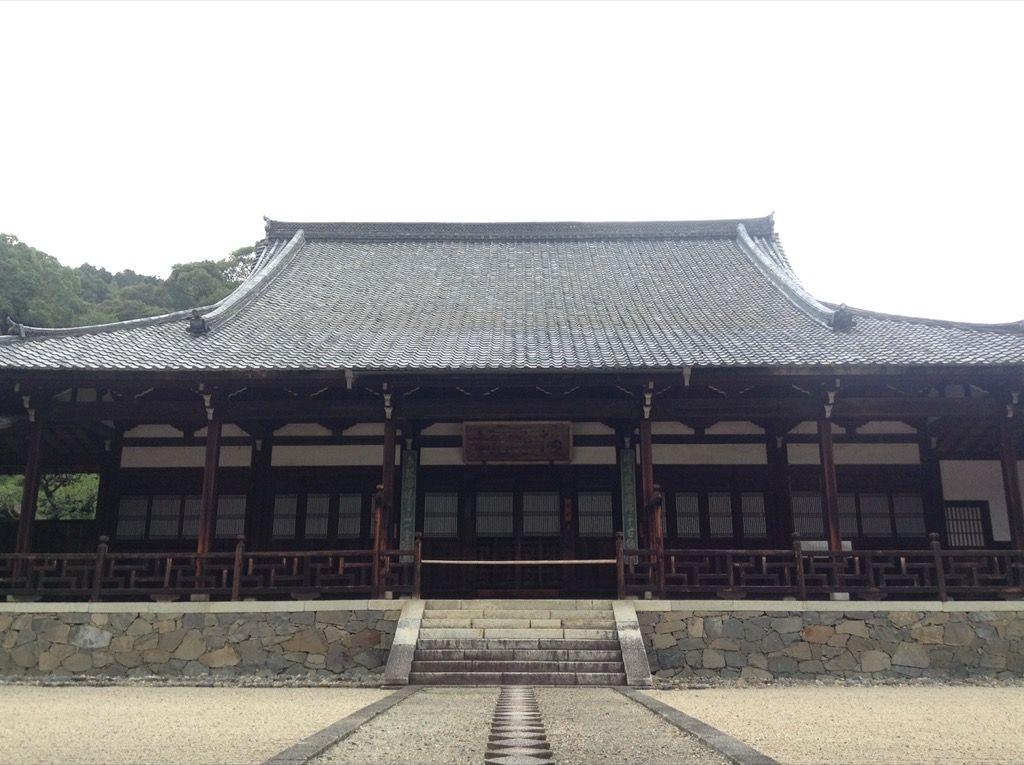
The Dharma hall, Ōbakusan Manpukuji

On the third day of the first month of Enpō 8 (1680), the year he turned seventy, the masters of Ōbakusan prepared an otoki and celebrated ahead of Master Mokuan's birthday. Granting everyone's wish, Master Mokuan went up to the Dharma hall and preached on the theme of the two characters 寿生 (long life, and birth).

On the fifteenth, when the winter training period had ended safely, he had the drum beaten to gather everyone, gave his sermon on resigning as abbot of Ōbakusan, and retired to Shiun-in. At first the abbacy of Ōbakusan was to rotate, each term limited to three years, but in Kanbun 5 (1665) Master Ingen petitioned the shogunate, did away with the rotation and had Master Mokuan hold the office alone. Even so, his daily life as abbot through seventeen years, a term without equal before or since, was beyond what pen or tongue can tell. That he put the buildings of Ōbakusan in order, that the Ōbaku style of Zen swept the whole country, and that outstanding Zen monks came forth one after another from under Master Mokuan and were active in Kantō, in Kinki and in Kyushu, tells how great a Zen teacher Master Mokuan was.

Chapter 23

The days after retirement

He had Master Erin Shōki (Huilin Xingji) succeed to the seat of third abbot of Ōbakusan, and though he was said to have retired, that was so in name only: not for a single day did he indulge in ease, but sat in zazen, and to those who came seeking the awakening of Zen he kindly showed the true face of Zen and guided them. He himself strictly kept the pure rules (shingi, the rules of a Zen temple) laid down for each day, and even when he was busy and had no time to spare he never did anything that departed from the rules. The Master's vigor grew only stronger with age; he seemed calm and unhurried, with no sign of decline.

In the winter of Tenna 2 (1682), after sitting in zazen he caught a cold. Being so advanced in years, his condition worsened for a time, but with the new year the illness took a turn for the better, and so he held a tea gathering and urged the masters who had been staying overnight in attendance to go back to their own temples and posts.

Chapter 24

Gravely ill

On the tenth day of the first month of Tenna 4 (1684), he sent his attendant as a messenger to Lord Inaba, the shogunate's deputy in Kyoto (Kyoto shoshidai), and had him convey his thanks for the efforts he had made for Ōbakusan over so many years. On the thirteenth the illness suddenly returned; everyone quietly called a doctor and begged the Master to let himself be examined, but he would not permit it, and declined, saying, "It seems this illness is not one that a doctor can cure."

On the eighteenth, Master Mokuan understood that his illness had at last become critical, and turning to those attending him on his left and right, he told them, "When I have left this world, you must never go against the rules laid down by the Buddha. Set your hearts solely on the flourishing of Buddhism, and keep firmly to the way of Zen that the patriarchs walked: that above all is what I hope of you."

Chapter 25

The last phrase

Master Essan Dōshū (Yueshan Daozong), who had hurried there on hearing the news, said, "Please, live on in this world a little longer," but Master Mokuan comforted him instead, saying, "Not even Śākyamuni could live on forever. How could I do such a thing?" When he was asked for a death verse, Master Mokuan said, "All things are empty, and nothing has a form that stays unchanged forever. This is my one phrase on leaving the world." For a while he looked at those at his side; then he quietly closed his eyes and passed away as gently as if he were easing into rest. It was two o'clock in the morning on the twentieth day of the first month of Tenna 4 (1684). He had lived seventy-four years, and had been a monk for fifty-seven. His remains were enshrined at the stupa of Manju-in within Ōbakusan.

Source: The Story of Zen Master Mokuan (木庵禅師物語)
Published October 1982

Contents